
See more Toronto Sun on Google — save as a Preferred Source
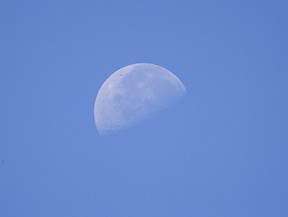
A massive piece of a SpaceX rocket floating in space since last year is believed to have smashed unintentionally into the moon at a high speed early Wednesday.
The collision, which occurred around 2:35 a.m. ET, will not affect Earth but is expected to blast out a new lunar crater.
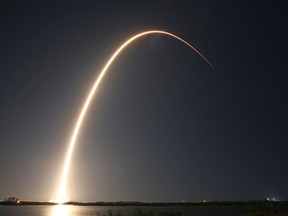
The 4,000-kilo object is the second part (known as a stage) of a SpaceX Falcon 9 rocket that had launched a lunar lander from Firefly Aerospace toward the moon in January 2025.
It was travelling at 8,690 km/h, but none of the spacecraft orbiting the moon were said to be in a position to capture images of the impact live.
NASA said the impact was expected to carve out a crater about 18 metres wide and four metres deep.
More data needed on the new crater
The smash-up would have been difficult to spot with the naked eye from Earth due to the crash kicking up a plume of lunar dust that would likely be illuminated by sunlight, according to NASA spokesperson Jimi Russell.
Still, both professional and amateur astronomers using high-quality telescopes and cameras were not immediately able to confirm the impact, possibly due to the impact site being close to the visible edges of the moon.
The space agency said it would look to capture images of the site before and after the impact, with any data collected to help scientists “better understand artificial impacts and their exploration implications.”
Space X said the impact was unintentional.

‘No danger to Earth’
“The impact poses no danger to Earth and NASA scientists are planning to collect lunar data from the event and refine techniques for tracking objects in space,” Russell noted.
Rocket stages typically fall back into Earth’s atmosphere and either burn up or plunge into the ocean after boosting the rocket’s payload to a specific spot in orbit.
The January 2025 lunar lander mission, however, required more thrust than other missions closer to Earth, so the rocket’s second stage remained in space, discarded along with thousands of other pieces of space junk that active satellites must avoid.
Earlier this year, astronomers determined that the rocket stage, which had dumped its remaining fuel and cannot be controlled, was on a trajectory ending at the moon.
Stopping future collisions
“What has happened is essentially a mixture of solar activity and gravity forces have put it on a path toward the moon,” Julianna Scheiman, SpaceX director of NASA science and Dragon programs, told reporters on Monday.
She added that NASA and SpaceX are discussing ways to prevent future lunar impacts, including NASA planning to build a lunar base and send routine astronaut missions to the lunar surface beginning later this decade under its multibillion-dollar Artemis program.
— With files from Reuters