
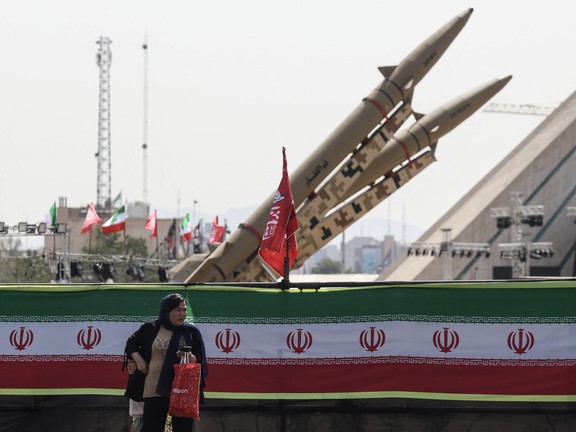
Iran’s decision to escalate the war last week appears counterintuitive. As Omani mediators sought to preserve a diplomatic opening through a renewed truce and continued negotiations over the Strait of Hormuz, Tehran instead launched a direct ballistic missile attack on U.S. bases in Jordan, while expanding pressure across other fronts. The move sharply increased the risk of a broader regional conflict.
Reports soon emerged that Washington was preparing strikes against Iranian energy infrastructure before Saudi Arabia, Qatar and the United Arab Emirates reportedly intervened to preserve the diplomatic track. Why did Tehran choose escalation at the very moment when an off-ramp appeared within reach? The answer lies in the Islamic Republic’s internal balance of power.
Three distinct centres of power currently compete over how Iran should prosecute the war and negotiate its eventual settlement. They differ on methods and acceptable levels of risk. Yet they remain broadly aligned on the strategic objectives they seek to achieve.
The first, and currently the most influential, is the faction that’s likely led by Ahmad Vahidi, commander-in-chief of the Islamic Revolutionary Guard Corps (IRGC). This camp represents the dominant force in shaping Iran’s wartime decisions. It views military pressure as the prerequisite for any meaningful outcome and insists that, if negotiations occur at all, they must proceed from a position of strength.
For Vahidi, the Strait of Hormuz is Iran’s principal source of strategic leverage. Maintaining coercive control over the Strait strengthens its hand in future negotiations over its nuclear program. Losing that leverage would weaken Tehran’s bargaining position long after the current war ends.
The second faction is represented by President Masoud Pezeshkian, Foreign Minister Abbas Araghchi and Parliamentary Speaker Mohammad Bagher Ghalibaf. This camp’s priority is to contain the economic damage that war and sanctions are inflicting on the regime.
They are equally concerned about the domestic front. A population that has repeatedly demonstrated its desire for political change is a strategic challenge no less consequential than the military confrontation abroad. They are prepared to negotiate limited compromises over the administration of the Strait of Hormuz.
The third faction, centred on the Paydari Front and figures such as Saeed Jalili, rejects negotiations with Washington altogether. Although smaller than the other two camps, it continues to exert ideological pressure against compromise and enjoys influence through key state institutions, such as Islamic Republic of Iran Broadcasting.
This group’s strategy is to move beyond a defensive posture and seize the initiative. Rather than confining the conflict to Iranian territory, it seeks to widen the theatre across the region and beyond, raising the costs for Iran’s adversaries and restoring deterrence on more favourable terms.
The other factions have adjusted to the strategic environment created by military escalation. That pattern became evident immediately after Iran’s attacks on American bases in Jordan, when Araghchi launched an intensive diplomatic effort, speaking with his counterparts in Cyprus and Bulgaria before contacting British Foreign Secretary Ed Miliband.
Those conversations reportedly sought to discourage additional support for American military operations and warn against further expansion of the conflict. In this instance, military escalation and diplomacy served as sequential instruments of the same strategy.
For years, officials and analysts in Tehran have discussed U.S. President Donald Trump’s strategic posture through the language of the “madman theory” — the deliberate cultivation of unpredictability to gain bargaining leverage. Recent Iranian behaviour indicates that the regime is attempting to appropriate the same logic. Rather than reacting to American unpredictability, Tehran is attempting to manufacture uncertainty of its own.
Immediately after Trump reportedly signalled his intention to strike Iran’s energy infrastructure, Nour News, a media outlet closely associated with Iran’s Supreme National Security Council, published a list of energy facilities across the Persian Gulf that the IRGC could target in retaliation. The message was unmistakable: any attack on Iran’s energy sector would be met with a region-wide response.
In effect, the IRGC’s conduct throughout the latest round of hostilities suggests a deliberate willingness to escalate, in order to demonstrate resolve and shape America’s calculations. This is classic brinkmanship, as defined by Thomas Schelling: the deliberate manipulation of escalating risk to convince an opponent that continued confrontation may lead to consequences that neither side can fully control. Iran’s recent conduct closely fits this model.
This strategy places Washington in an increasingly difficult position. Every attempt to increase military pressure carries the risk of provoking another round of Iranian escalation rather than compelling restraint. The result is a strategic dilemma in which measured responses risk appearing indecisive while stronger responses threaten a wider war. Trump’s reported decision to suspend planned strikes against Iranian energy infrastructure, even if only temporarily, illustrates the precarious balance he is trying to achieve.
This locks the conflict into a dangerous strategic dynamic. Temporary pauses in escalation, even when tactically prudent, should not be mistaken for a durable solution. They merely postpone the next crisis while allowing each side to prepare for it.
The core issues are not resolved yet. The next round of hostilities is likely to begin with a higher level of intensity than the last. Each cycle of brinkmanship raises the threshold of deterrence, requiring ever greater demonstrations of resolve to preserve credibility. This means that every future confrontation will begin where the previous one ended.
National Post
Avideh Motmaen-Far is the president of the Council of Iranian Canadians. Masoud Zamani is director of Nexara Intelligence.